

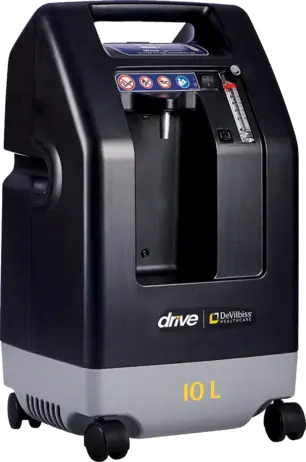
Your oxygen concentrator is life-critical equipment. Routine maintenance keeps it delivering the correct oxygen concentration, extends its lifespan, and can prevent costly repairs. The tips below are general guidelines — always refer to your specific device's user manual and consult your HME provider before making any changes to your therapy settings.
Home stationary concentrators (like the DeVilbiss 1025DS, Respironics EverFlo, and Invacare Platinum) run continuously and rely on clean airflow. Keeping filters clear is the single most impactful thing you can do.
Weekly or as directed. The large foam cabinet filter on the back or side of the unit traps household dust. Remove it, rinse with warm water, let it air dry completely, then reinstall. Never run the concentrator with a wet or missing filter.
Always. Keep at least 12 inches of clear space around all sides of the unit. Do not place it against a wall, inside a closet, or near curtains or bedding. The concentrator pulls in large volumes of room air — restricted airflow causes the compressor to overheat and sieve beds to wear prematurely.
Daily if used. Empty the humidifier bottle, rinse with mild soap and warm water, and refill with distilled water only. Replace the bottle entirely every 6 months or if you see discoloration, cracks, or mineral buildup that cannot be cleaned.
Weekly. Check the oxygen tubing for kinks, cracks, or discoloration. Replace nasal cannulas every 2–4 weeks or sooner if they become stiff, discolored, or irritating. Cracked tubing allows oxygen to leak before it reaches you, reducing your effective flow rate.
Monthly. Briefly obstruct the air intake (following your manual's test procedure) to confirm the low-oxygen alarm triggers. A non-functional alarm is a safety hazard. If the alarm does not sound, contact your HME provider or a qualified biomedical technician immediately.
Always. Keep the unit at least 5 feet from open flames, gas stoves, candles, and smoking areas. Post "No Smoking — Oxygen in Use" signs. Oxygen greatly accelerates combustion. Never use aerosols, oils, or petroleum-based products near the device or your cannula.
| Task | Frequency |
|---|---|
| Clean foam intake filter | Weekly |
| Wipe down exterior with damp cloth | Weekly |
| Inspect tubing and cannula for damage | Weekly |
| Empty & clean humidifier bottle | Daily (if in use) |
| Test alarm function | Monthly |
| Replace nasal cannula | Every 2–4 weeks |
| Replace humidifier bottle | Every 6 months |
| Professional preventive maintenance service | Annually |
Portable concentrators (like the Philips SimplyGo, Invacare Platinum Mobile, and Respironics SimplyGo Mini) travel with you and face additional stressors — heat, vibration, dust, and variable charging habits. Battery care and filter cleanliness are especially critical.
Weekly or more often when traveling. Locate the small intake filter (check your manual — it is typically on the bottom or side). Remove it and tap gently to dislodge dust, or rinse with water if it is a washable foam type. Let it dry completely before reinstalling. A clogged filter strains the compressor and reduces oxygen output.
Ongoing. Avoid storing the unit with a completely depleted battery for extended periods — this permanently reduces battery capacity. If storing the device for more than a week, leave the battery at approximately 40–60% charge. Charge at room temperature; heat shortens lithium battery life significantly.
Always. Never leave a portable concentrator in a parked car during summer. Heat above 104°F (40°C) can damage the sieve beds, battery, and electronics. Similarly, do not operate in freezing temperatures unless the device is rated for it. Allow the unit to return to room temperature before use after being in extreme cold.
Before each flight. Confirm your device is FAA-approved (look for the "FAA Approved for Use on Aircraft" label). Notify the airline at least 48 hours in advance. Bring enough battery life for 150% of total travel time including layovers. Carry your prescription and a letter from your doctor. Never check the device as baggage.
Weekly. Portable units move with you, making tubing more prone to kinking and cracking. Check the full length of the supply tubing before each use. Replace cannulas every 2 weeks for active users. A leak anywhere between the unit and your nose reduces your actual oxygen dose.
Always during operation. Do not carry the unit in a bag or backpack that covers the intake and exhaust vents. Many carry cases are designed with open mesh panels for this reason — use only cases designed for your specific model. Covering vents while running causes rapid overheating.
| Task | Frequency |
|---|---|
| Clean particle intake filter | Weekly (more often when traveling) |
| Wipe down exterior and carry handle | Weekly |
| Inspect tubing and cannula for damage | Before each use |
| Replace nasal cannula | Every 2 weeks for active users |
| Check battery charge and condition | Before each outing |
| Professional preventive maintenance service | Annually |
Routine cleaning is something you can do at home, but certain symptoms require a qualified biomedical technician. Contact your HME provider or a repair service if you notice any of the following:
Annual professional service — even when the device appears to be functioning normally — is strongly recommended. Sieve beds degrade gradually and oxygen purity can drop below therapeutic levels before any alarm triggers.
Download this guide as a PDF to print or save for reference.
Download / Print PDF
Fast, Reliable Medical Equipment Repair Services you can trust.
© XPRT Biomedical Service, Inc 2026 | All Rights Reserved